

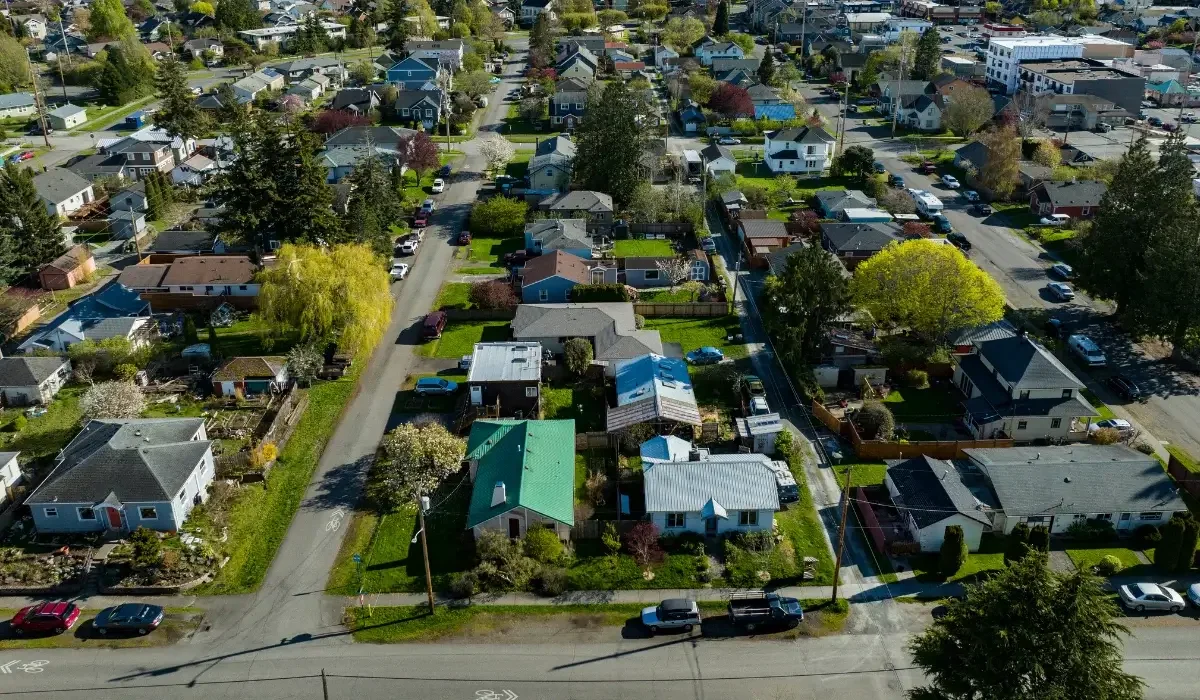
Bellingham has a lot of beautiful older homes. Walk through the Lettered Streets, the Columbia neighborhood, or South Hill and you'll find houses that have stood for the better part of a century, full of the kind of character you just can't build new. But along with that charm comes a reality every owner of a vintage home eventually faces: the ground these houses sit on has been shifting under them for a very long time, and many of them aren't quite as level as they used to be.
If you own an older Bellingham home with floors that slope or doors that won't quite close, you're not alone, and you're not necessarily looking at a disaster. House leveling for vintage homes is common work around here. It just comes with a few considerations that newer houses don't have, and knowing them ahead of time makes the whole process a lot less stressful.
Why Older Homes Settle in the First Place
Part of why so many older homes need leveling is simply time. Decades of seasonal wet and dry cycles, shifting soil, and moisture work on a foundation in ways that add up slowly but relentlessly. Our regional climate plays a direct role here. The Washington State Climate Office notes that Western Washington is much wetter and milder than the eastern side of the state, thanks to the ocean and Puget Sound, and all that moisture keeps the ground around these homes damp and active year after year.
Older homes also tend to sit on older foundation systems that were built to the standards of their day, not ours. Footings were often smaller, drainage was an afterthought, and the soil was rarely engineered the way it would be for new construction now. None of that makes these homes bad. It just means they've had more time, and less modern protection, while the ground beneath them kept moving.
The Post and Beam Factor
A great many older Bellingham homes sit on post and beam foundations, with wood posts and beams holding the house up over a crawl space. This was a sensible way to build, especially on the sloped and waterfront lots that are so common in Whatcom and Skagit counties, and it's still a perfectly good system when it's maintained.
The catch is that post and beam systems depend on wood, and wood in a damp crawl space is vulnerable over the long haul. Posts can rot at the base, beams can sag, and footings can settle, all of which show up as uneven floors above. If your home has this kind of foundation, it's worth understanding how a post and beam foundation actually works so the leveling conversation makes more sense. In many vintage homes, leveling is as much about addressing tired posts and beams as it is about the ground underneath them.
Related: How Rebar Corrosion Quietly Weakens Concrete Structures Over Time
The Signs Owners of Older Homes Tend to Notice
Vintage homes talk to you if you're listening. Floors that slope toward the center of a room or feel bouncy underfoot, doors and windows that stick or won't latch, gaps opening between trim and walls, and cracks that keep coming back after you patch them are all common signals. In an older home it can be tempting to write these off as "just how old houses are," and sometimes that's partly true.
The important distinction is whether things are stable or still moving. A home that settled generations ago and hasn't budged since is in a very different place than one that's actively shifting now. If you've noticed your floors getting more uneven over time rather than staying put, that's usually the sign that the settling is ongoing and worth looking into rather than living with.
What Makes Leveling an Older Home Different
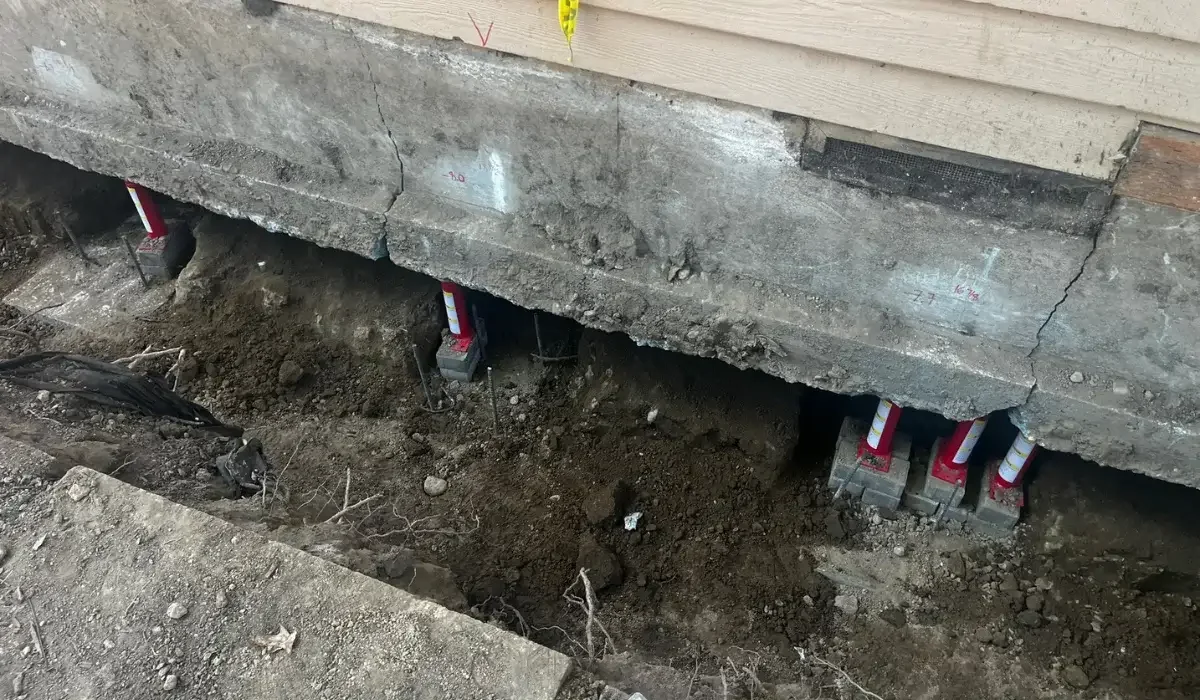
Leveling a vintage house takes a gentler, more patient hand than leveling a newer one, and there are good reasons for that. Older homes were built with materials and methods that don't always respond well to being moved quickly. Plaster walls, original trim, old windows, and aged framing can all crack or bind if a house is lifted too fast or too far.
Because of that, a careful crew raises an older home slowly, in small increments, watching how the whole structure responds rather than forcing a floor back to dead level in one go. Sometimes bringing a vintage home most of the way back to level is the right call, because chasing perfect level could do more harm to the old finishes than the slope ever did. The goal is a home that's safe, stable, and noticeably improved, achieved without damaging the very character you're trying to preserve.
Related: The Real Cost of Waiting: What Happens When a Sinking House Goes Unleveled
When Older Foundations Need More Than a Lift
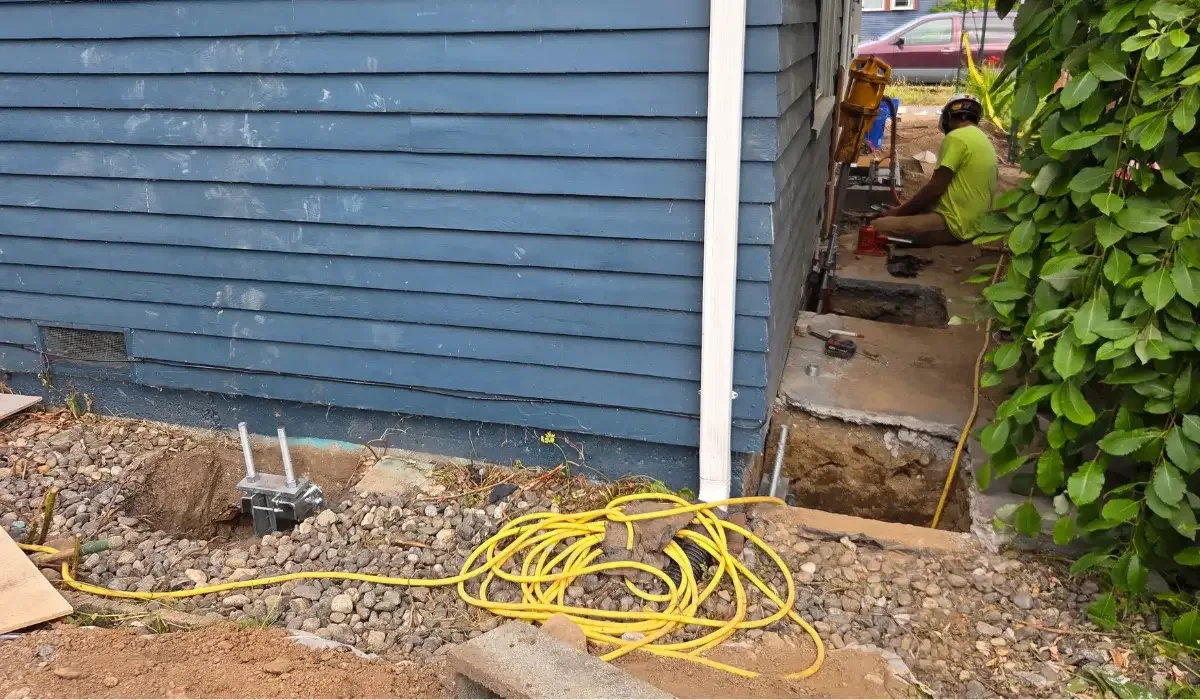
Sometimes the soil under an older home simply can't carry the load reliably anymore, and adjusting posts or shimming beams isn't enough on its own. This is common on Bellingham's hillside and waterfront lots, where fill soil and slopes complicate things.
In those cases, the fix may involve deeper support, such as pin piles driven down to stable soil that anchor the structure well below the layer that's been causing the movement. For a vintage home, this kind of permanent support can be the difference between leveling it once properly and chasing the same settling over and over. The right approach depends entirely on what's found underneath, which is why no two older homes get quite the same plan.
Related: How House Leveling Works: A Walkthrough from Inspection to Finished Job
Start With Understanding, Not Worry
If you own an older Bellingham home that's showing its age underfoot, the most useful first step is also the least dramatic one: find out what's actually going on. A proper assessment looks at the foundation, the crawl space, the posts and beams, the soil, and the drainage, and tells you whether you're dealing with old settling that's long since stopped or movement that's still happening.
Owning a vintage home means being its caretaker for a while, and these houses have usually proven they can last when they're looked after. A sloping floor isn't a sign your beautiful old home is failing. It's just the house asking for some attention, and with the right care it'll likely stand solid for another generation of owners who fall in love with exactly the character you did.
Source:
Washington State Climate Office. Washington's Climate. climate.uw.edu. https://climate.uw.edu/washingtons-climate/
