

Concrete feels about as permanent as anything in a home. It's hard, heavy, and seemingly indestructible, which is exactly why the trouble hiding inside it so often goes unnoticed. Most structural concrete has a steel reinforcing bar, or rebar, running through it, and that steel is what gives concrete its strength in tension. When that rebar starts to corrode, the damage begins deep inside the slab or wall, long before anything shows on the surface. By the time you can see it, the process has usually been underway for years.
Understanding how rebar corrosion works, and why it's so quiet, helps explain why some concrete problems seem to appear out of nowhere and why catching them early matters so much.
Why Concrete and Steel Are Supposed to Work Together
Concrete is tremendously strong when you press on it, but it's weak when you pull or bend it. Steel is the opposite. Put the two together, with rebar embedded inside the concrete, and you get a material that handles both kinds of stress. This is why foundations, footings, slabs, and walls almost always have steel inside them.
There's a second benefit too. Fresh concrete is highly alkaline, and that alkalinity forms a thin protective film around the steel that essentially stops it from rusting. As long as that chemistry holds, the rebar can sit inside the concrete for generations without a problem. The trouble starts when something breaks down that protection and lets the steel begin to corrode.
The Slow Chemistry of Corrosion
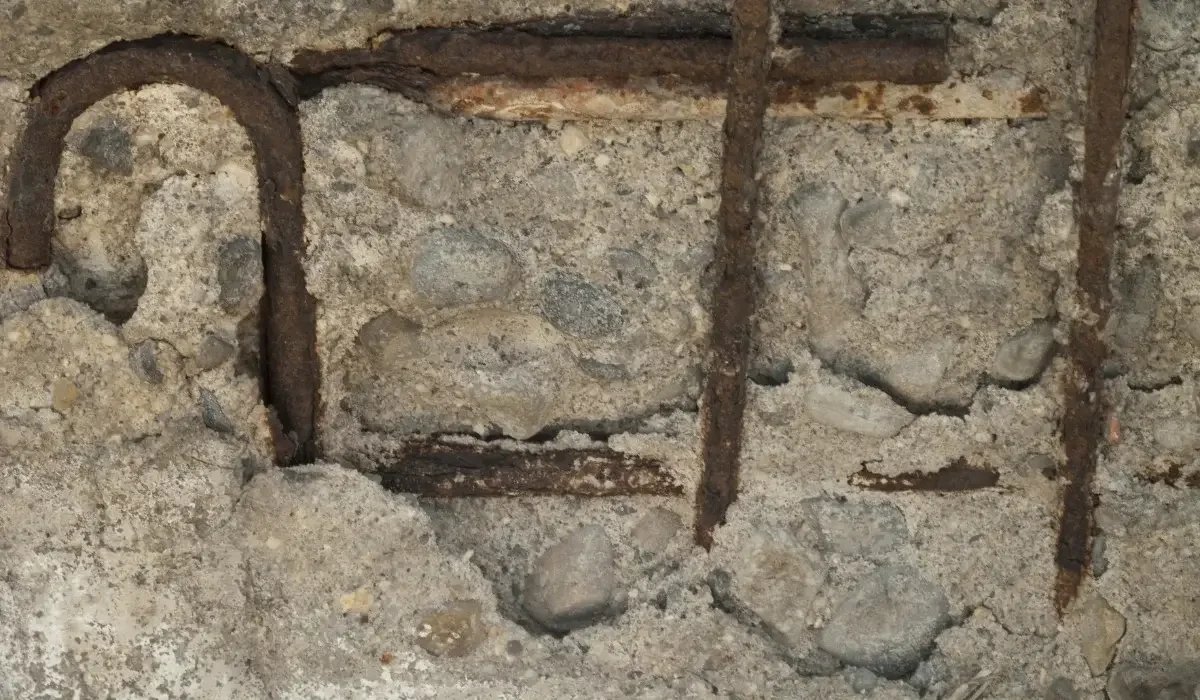
Rebar corrosion comes down to a simple reality: steel rusts when it's exposed to both water and air, and concrete is porous enough to let both reach the steel over time. As a forensic engineering analysis of the problem explains, once reinforcing steel corrodes, the rust expands and pushes against the surrounding concrete, causing cracking, delamination, and spalling. That expansion is the key. Rust takes up far more space than the original steel did, so as it forms, it creates pressure from the inside out.
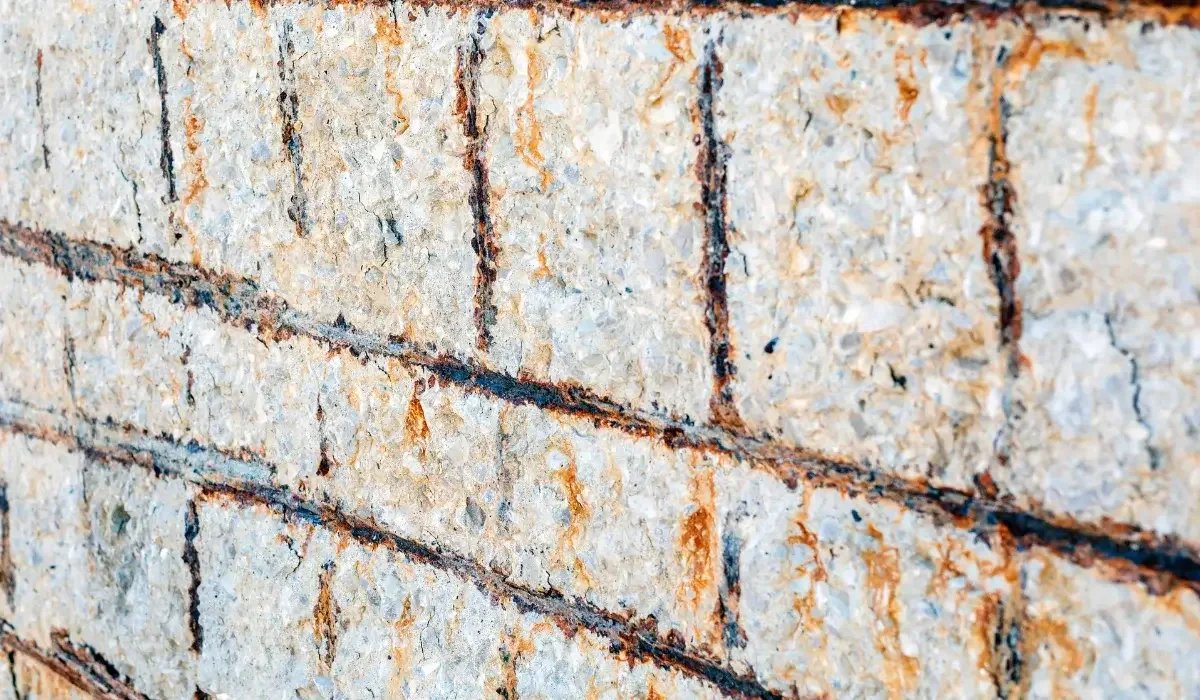
This is what makes the damage so sneaky. The corrosion is happening inside the concrete, where you can't see it, and the first outward signs are often just a faint crack or a rust colored stain. Underneath, the steel may already be losing the cross section it needs to do its job.
Related: How to Prioritize Foundation Repairs When You Can't Fix Everything at Once
What Speeds It Up
Left completely dry, concrete can protect its steel almost indefinitely. In the real world, though, several things accelerate the process, and most of them come down to water and salt.
Moisture is the constant driver. Anywhere water can repeatedly reach the concrete, through poor drainage, chronic dampness, or ground moisture wicking up from below, corrosion has what it needs to get going. Chlorides make it dramatically worse. Salt from coastal air or from de-icing salts dissolves in water and carries chlorides into the concrete, which attack the steel's protective film and kick off rusting even in concrete that would otherwise be fine.
Cracks in the surface give water and chlorides an express lane straight to the steel, which is one reason small cracks shouldn't be dismissed. This is also why managing water around a structure, with something as basic as a French drain that keeps groundwater away from the foundation, does so much to protect the steel buried inside the concrete.
The Warning Signs on the Surface
Because the damage starts hidden, learning to read the early surface clues is valuable. Rust colored staining bleeding through the concrete is a classic sign that steel underneath is corroding. Fine cracks that run in straight lines, often tracing the path of the rebar beneath, are another, since the expanding rust cracks the concrete along the bars.
Then there's spalling, where chunks or flakes of concrete break away from the surface, sometimes exposing the rusted steel underneath. Spalling is often the point where the problem finally becomes impossible to ignore. If you're seeing cracking or flaking and aren't sure how serious it is, it helps to understand why concrete cracks and spalls in the first place, because the cause determines whether you're looking at a cosmetic issue or structural corrosion that's still progressing.
Related: Concrete Repair vs Replacement: How to Know Which One Your Property Needs
Why It Feeds On Itself
One of the most important things to understand about rebar corrosion is that it doesn't stay contained. Once it starts, it tends to accelerate. The expanding rust cracks the concrete, those cracks let in more water and more chlorides, and the extra moisture speeds up the corrosion, which creates more cracking. Each round of damage makes the next round easier.
This is why a small stain or a hairline crack can seem to sit quietly for a while and then suddenly worsen. The process was building the whole time, and it reached the point where the damage became visible and started compounding quickly. A problem that looked minor last year can be noticeably worse this year, not because something new happened, but because the cycle kept turning.
What Can Be Done About It
The encouraging part is that rebar corrosion is both preventable and, caught early enough, repairable. Prevention is mostly about keeping water and salt away from the concrete, which means good drainage, directing runoff away from foundations and slabs, and sealing concrete that's exposed to the elements. The less moisture reaches the steel, the longer that protective chemistry holds.
When corrosion has already started, the right response depends on how far it's gone. Surface level damage caught early can often be cleaned, treated, and patched before the steel loses significant strength. More advanced corrosion, where the rebar has lost a lot of its cross section or the surrounding concrete is badly compromised, may call for more substantial repair or replacement of the affected section. Sorting out which situation you're in is exactly the kind of judgment that goes into deciding between concrete repair and full replacement, and it's hard to get right without actually assessing what's happening to the steel inside.
Related: Exposed Rebar on Your Concrete: Why Rust Is a Bigger Problem Than It Looks
Don't Wait for It to Announce Itself
The quiet nature of rebar corrosion is the whole reason it's worth paying attention to. It won't knock on your door. It works out of sight, feeds on moisture, and only shows itself once the damage is already underway. The stain, the crack, the flaking surface are all late signals of something that started much earlier.
If you're seeing any of those signs on a foundation wall, a slab, or any structural concrete, the smart move is to have it looked at while the fix is still small. Concrete may feel permanent, but the steel inside it isn't, and a little attention early is worth a great deal more than a major repair down the road. Give us a call if you notice any rebar corrosion in your home.
Sources:
Robson Forensic. Concrete Spalling Expert Article. robsonforensic.com. https://www.robsonforensic.com/articles/concrete-spalling-expert-article
