

Concrete Repair vs Replacement: How to Know Which One Your Property Needs
A cracked driveway, a spalling walkway, a patio that's started to sink, or a line running across a foundation wall all lead to the same question. Do you patch it, or do you tear it out and pour new concrete? It's one of the most common things property owners ask us, and the honest answer is that it depends far less on the crack you can see than on what's happening underneath it.
Concrete is durable, but it isn't permanent, and not every flaw means the whole slab is finished. Some problems are surface deep and easy to correct. Others are signs that the concrete, or the ground it sits on, has bigger issues. Knowing which is which is what saves you from either overspending on a full replacement you didn't need or wasting money on a repair that was never going to hold.
The Question That Actually Matters
Before deciding between repair and replacement, there's a more useful question to ask: has the problem stopped, or is it still happening? InterNACHI, the home inspection association, frames it well in its guide to inspecting concrete. The key is figuring out whether the conditions that caused the damage have stabilized or are likely to keep causing problems over time.
That single distinction drives almost everything. A crack from concrete that shrank slightly as it cured years ago and hasn't moved since is a very different situation from a crack caused by soil that's still shifting under your foundation. The first is a candidate for a simple repair. The second won't stay fixed until the real cause is dealt with.
When Repair Is the Right Call
Repair usually makes the most sense when the damage is limited, stable, and on the surface. Hairline cracks, minor scaling or flaking, small areas of settling, and isolated chips or breaks tend to fall into this category. In these cases, the concrete itself is still sound, and the fix is about restoring the surface and sealing out water.
There are a lot of good options here, from crack sealing and injection to resurfacing and slab leveling for sections that have sunk. These approaches cost less, take less time, and are far less disruptive than a full replacement. If you're trying to sort out which cracks are truly minor and which ones deserve a closer look, it helps to understand the difference between a cosmetic crack and a structural one before you make any decisions.
Related: Why Early Foundation Repairs Cost Less Than You Think
When Replacement Makes More Sense
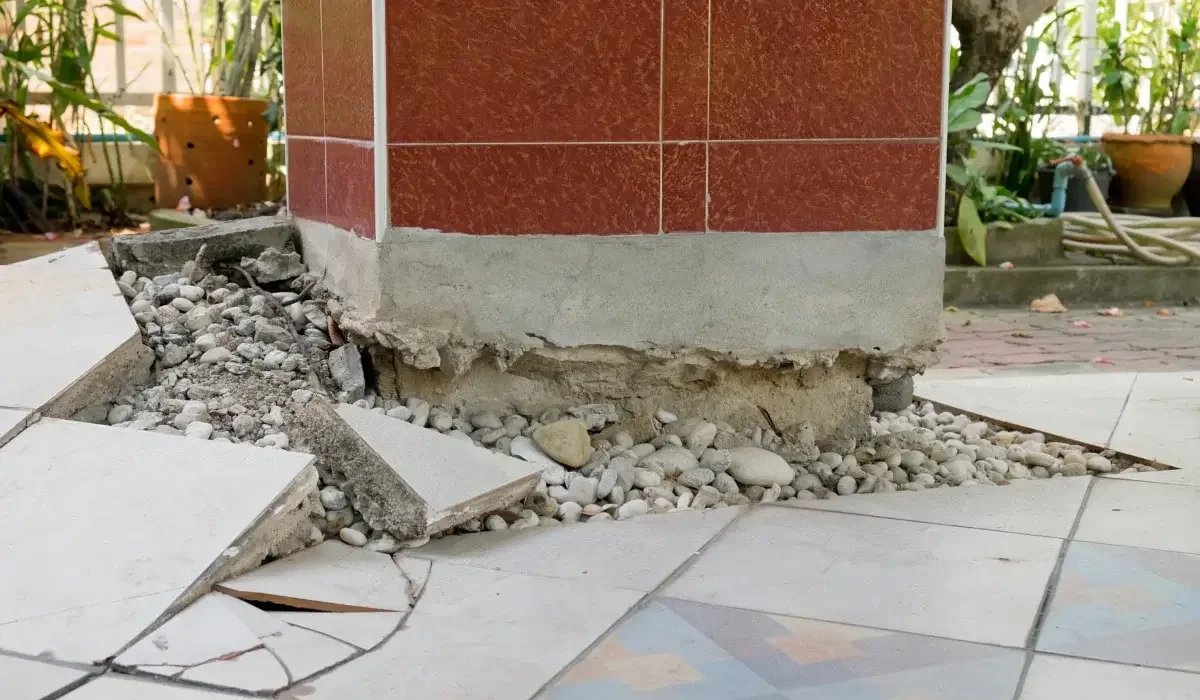
Replacement moves onto the table when the concrete is too far gone to save. Deep structural cracks, widespread crumbling, severe spalling that keeps coming back, large sections that have heaved or dropped out of alignment, and slabs that have simply reached the end of their service life are all cases where patching becomes a losing game. At that point, a repair is really just a temporary cover over a problem that's going to keep showing up.
Repeated failed repairs are their own kind of warning sign. If the same area keeps cracking or sinking no matter how many times it's patched, the concrete or the ground beneath it is telling you that a bandage isn't enough anymore.
Related: Exposed Rebar on Your Concrete: Why Rust Is a Bigger Problem Than It Looks

The Deciding Factor Is Usually What's Underneath
Here's the part that surprises people. The condition of the concrete often matters less than the condition of the soil and drainage around it. Concrete cracks and settles for a reason, and most of the time that reason is water and soil movement. When water erodes the soil beneath a slab, or expansive soil swells and shrinks with the seasons, the concrete loses its support and cracks or sinks to follow.
This is why replacing concrete without addressing the cause is one of the most expensive mistakes a homeowner can make. You can pour a beautiful new slab, and if the drainage problem underneath is still there, the new concrete will crack just like the old one did. Understanding why concrete cracks and spalls in our climate is a big part of getting this right, and correcting the water issue, often with something like a French drain that pulls water away from the area, protects whatever repair or replacement you choose.
Weighing Age, Extent, and Cost
A few practical factors help tip the decision. Damage that's localized, on newer concrete, with a cause that's already stable usually points toward repair. Damage that's widespread, on aging concrete, with a cause that's still active usually points toward replacement. Cost fits into this too, and not always the way people expect. A single repair almost always costs less than replacement up front, but a string of repairs on concrete that keeps failing can quietly add up to more than it would have cost to replace it.
None of these factors decides on its own. It's the full picture, severity, spread, cause, and age, that points to the right answer.
Related: Why Concrete Cracks and Spalls in Western Washington and What It Means for Your Home
How to Actually Know Which One You Need
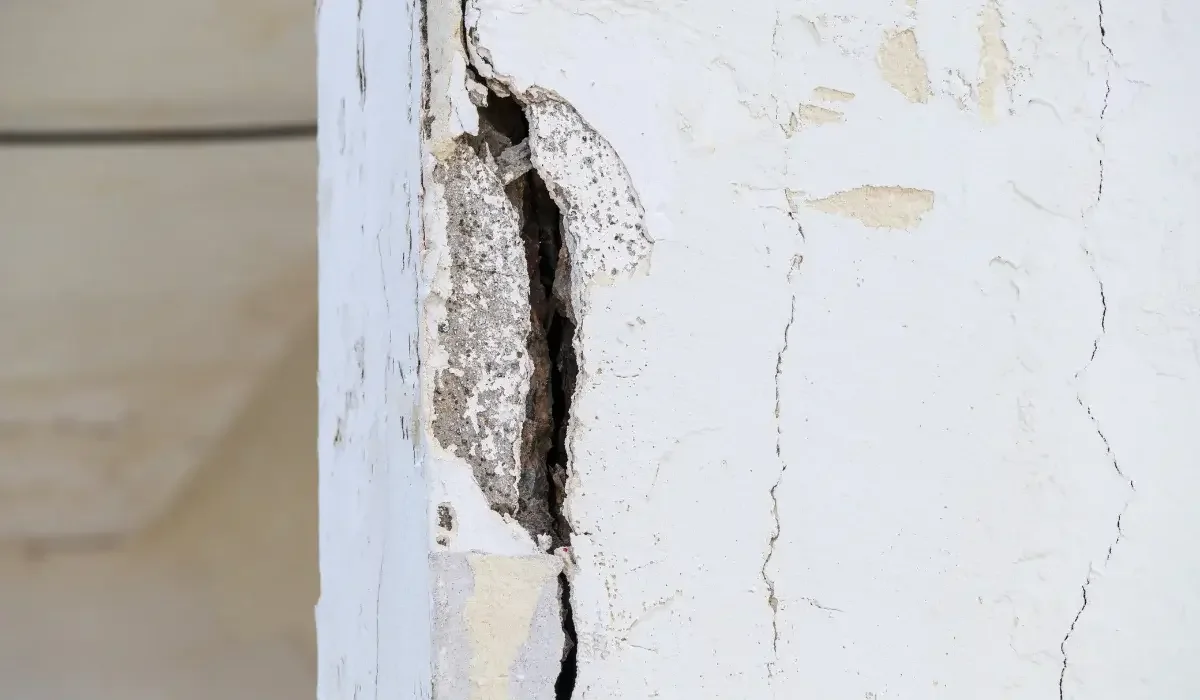
The truth is that most of these judgments are hard to make from a photo or a quick glance, because the most important part of the story is underground. A proper assessment looks at the concrete, soil, drainage, and history of the area to figure out whether the problem has settled down or is still in motion. More often than homeowners expect, the answer is that a targeted repair will do the job just fine.
If you're staring at a crack or a sinking slab and not sure what you're looking at, there's no harm in simply finding out. Getting a clear read on what's really going on, and why, is what lets you spend your money once and spend it well, whether that turns out to be a small repair or a full replacement.
Source:
Gromicko N, Gromicko B, Shepard K. Visual Inspection of Concrete. nachi.org. https://www.nachi.org/visual-inspection-concrete.htm
