

How Long Do Epoxy Floor Coatings Last in the Pacific Northwest Climate
Epoxy floors have become a favorite for garages, shops, and finished basements around here, and it's easy to see why. They look sharp, they wipe clean, and they stand up to a lot of abuse. The question we hear most often is a simple one: how long will one actually last?
The honest answer is that it depends far more on where the floor lives and how it was installed than on the epoxy itself. And in a climate as wet as ours, that second part carries even more weight than it would somewhere dry.
What "Lasts" Actually Means
There's a big gap between the epoxy kit someone rolls on over a weekend and a professionally installed system. A basic coating from a big box store might look great for a year or two before it starts to peel, chip, or lift under a car tire. A properly prepped, professionally installed floor is a different animal. Industry estimates commonly put a well installed epoxy or polyaspartic system somewhere in the range of ten to twenty years, and in the right conditions it can go longer.
The reason those numbers vary so much isn't the product on the label. It's everything that happens underneath and around the coating, which is exactly where our regional climate comes into play.
The Pacific Northwest Is Tough on Floors
Western Washington has a climate all its own. According to the Washington State Climate Office, this side of the state is much wetter and milder than eastern Washington, thanks to the moderating influence of the ocean and Puget Sound. That mild, damp pattern is wonderful for gardens and tough on anything that depends on a dry surface.
All that moisture doesn't just sit in the air. It works its way into the ground, raises the water table, and keeps concrete slabs damper than they'd ever be in a drier region. A garage or basement floor here is often fighting humidity and ground moisture year round, and that constant exposure is what separates a coating that lasts a decade from one that fails in a season.
Related: How House Leveling Works: A Walkthrough from Inspection to Finished Job

Moisture in the Slab Is the Real Enemy
If there's one thing that ends an epoxy floor early in this region, it's moisture moving up through the concrete. Concrete is porous, and in wet ground it acts a little like a sponge, pulling water up from below and pushing vapor toward the surface. When that vapor hits the underside of an epoxy coating, it builds pressure and slowly breaks the bond between the coating and the slab. The result is bubbling, peeling, or whole sections lifting away, and no amount of quality epoxy can survive it if the moisture isn't dealt with first.
This is why managing water around the home matters so much for floors, not just for foundations. Keeping groundwater away from the slab with proper drainage, like a French drain that redirects water away from the foundation, takes pressure off the concrete before a single coat of epoxy ever goes down. A floor installed over a slab that stays wet is borrowing time, no matter how good the coating is.
Related: What Epoxy Floor Coatings Can Do for Your Bellingham Garage or Shop
Surface Prep Decides Almost Everything
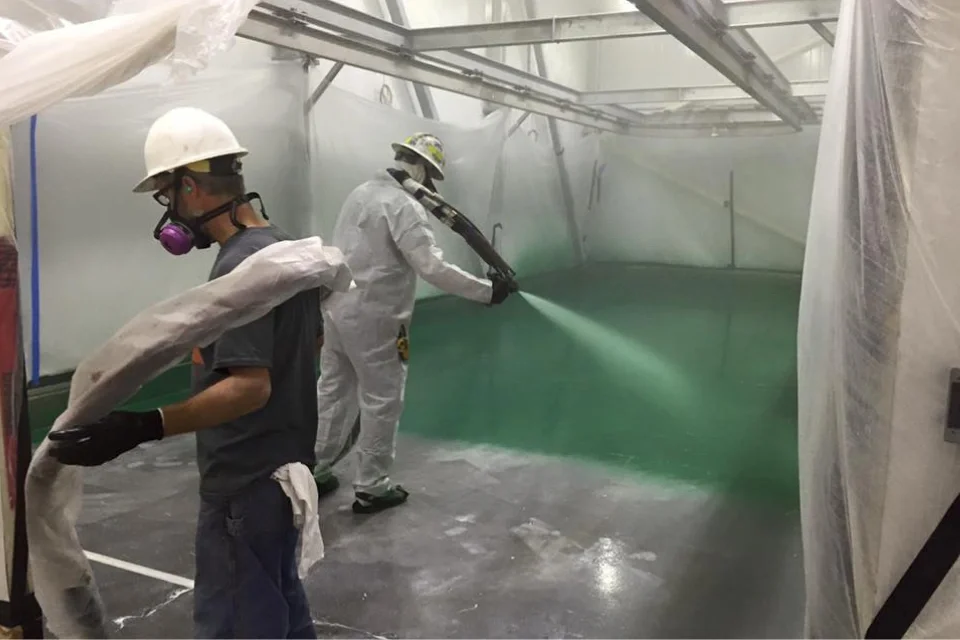
Here's the part that gets skipped most often, and it's the part that matters most. Before any coating goes down, the concrete needs to be mechanically ground or shot blasted to open up the surface, cleaned thoroughly, and tested for moisture. That moisture test isn't optional in our climate. A slab that reads too high needs a moisture mitigating primer or a different system entirely, and skipping that step is the single most common reason floors fail early around here.
Big box kits almost never include real surface prep or moisture testing, which is why they so often disappoint. The coating isn't necessarily bad. It just never had a fair shot at bonding to the concrete.
Where the Floor Lives Changes the Math
Not every space treats a floor the same way. A garage floor deals with hot tires, which can pull a poorly bonded coating right off the slab, along with road salt, oil, and big temperature swings between a cold morning and a warm afternoon. A basement floor faces steadier but relentless humidity, especially in the damp spaces where moisture and basement mold tend to show up together. A heated, well ventilated shop is the friendliest environment of the three, and floors there tend to reach the upper end of their expected life.
Knowing how a space will be used helps determine which system makes sense in the first place. A one size fits all approach is part of why so many coatings underperform.
Related: How Pacific Northwest Weather Affects Your Foundation and What You Can Do About It
How to Get the Most Years Out of Yours
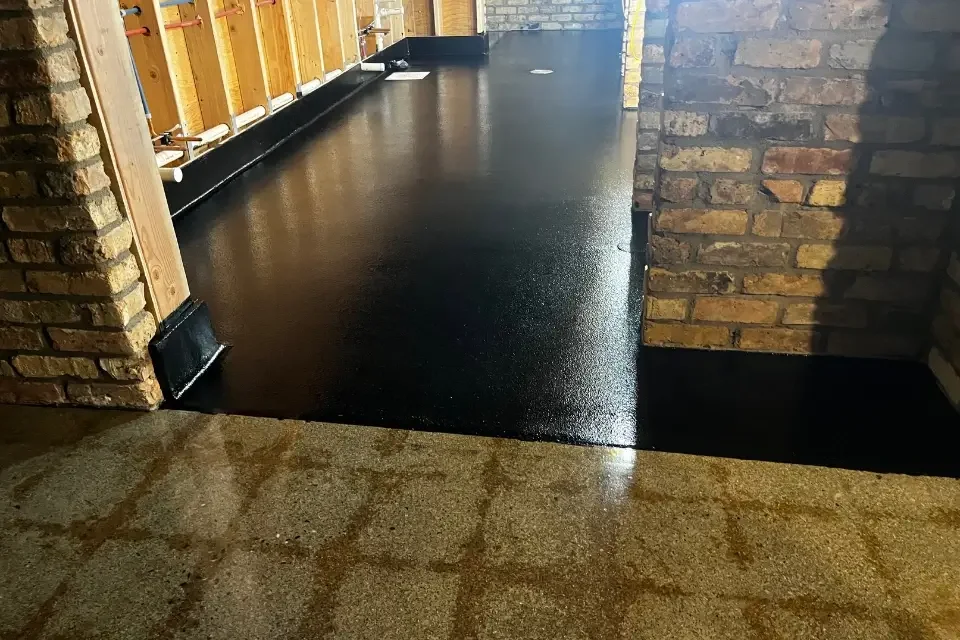
The best thing you can do for an epoxy floor is address moisture before it ever becomes the coating's problem. That means looking at drainage, grading, and humidity as part of the job rather than an afterthought. Our guide to common waterproofing options for your home walks through how to keep water away from the spaces where these floors usually live.
After that, upkeep is simple. Sweep and mop as needed, wipe up oil and chemicals before they sit, and use floor mats under vehicle tires to cut down on hot tire pickup. Handle those basics on a floor that was properly prepped and installed, and there's no reason it can't stay looking good and holding strong for many years, even through one wet Northwest winter after another.
An epoxy floor is only ever as good as the slab beneath it and the prep that went into it. Get those right for our climate, and the coating on top will do exactly what you hoped it would.
Source:
Washington State Climate Office. Washington's Climate. climate.uw.edu. https://climate.uw.edu/washingtons-climate/
