

Sticking Doors and Windows: Is It Just an Old House or a Foundation Issue
It starts with a door that doesn't quite close the way it used to. You push a little harder, adjust the knob, and move on. Then a window starts fighting you every time you try to open it. You chalk it up to the age of the house, maybe a little humidity, and figure it'll sort itself out once the season changes.
Sometimes that's exactly right. But sometimes it isn't, and telling the difference early can save you from a much more serious and expensive problem down the road.
At Foundation Restoration, sticking doors and windows are one of the most common symptoms homeowners mention before discovering they have a foundation issue. Here's how to know which situation you're actually dealing with.
When Humidity and Seasonal Changes Are the Culprit
Wood is a natural, porous material that absorbs and releases moisture as the humidity in your home rises and falls. When indoor humidity climbs, wood swells. When it drops, wood contracts. This is completely normal behavior, and in many cases it's exactly what's causing a door or window to stick temporarily.
The EPA recommends keeping indoor humidity levels between 30 and 60 percent to minimize moisture related problems in the home, including wood swelling and mold growth. If your home's humidity tends to run high, especially during wet Pacific Northwest winters or in poorly ventilated spaces, that moisture can cause wood frames to expand enough to create friction against their openings.
Seasonal sticking that resolves on its own as conditions change is generally benign. A door that drags a little in December and opens fine by July is almost certainly responding to humidity rather than signaling a structural problem.
When It's More Than Just the Weather
The part that makes sticking doors and windows tricky is that foundation problems can produce the exact same symptom. When a foundation shifts, settles unevenly, or begins to move due to soil instability or water pressure, it distorts the structural frame of the house above it. That distortion pulls walls, floors, and door and window frames out of square, and that's when things start sticking, binding, and refusing to close properly.
The critical difference is the pattern of when and where it's happening.
Related: How Pacific Northwest Weather Affects Your Foundation and What You Can Do About It

Signs That Point Toward a Foundation Problem
There are several clues that suggest what you're dealing with is structural rather than seasonal.
It's happening in multiple places at once. One sticking door in an older home after a rainy week is pretty unremarkable. Multiple sticking doors and windows appearing around the same time, especially in different areas of the house, is a pattern worth taking seriously.
It started suddenly and hasn't improved. Humidity related sticking tends to ease when conditions normalize. If a door that started sticking six months ago still isn't closing right despite a change in seasons, the wood swelling explanation starts to lose its footing.
There are other symptoms nearby. Sticking doors and windows caused by foundation movement rarely show up alone. Look for diagonal cracks running from the corners of door or window frames, gaps that have opened up between walls and ceilings, floors that feel slightly uneven near the affected areas, or visible separation between the trim and wall. When sticking doors come with any of these companions, a foundation evaluation becomes a much higher priority.
The sticking is at the top or side of the frame rather than the bottom. Humidity swelling tends to affect the top edge of a door most because that's where the most wood is exposed. Foundation movement, on the other hand, can rack a frame in any direction depending on how the structure is shifting, causing binding along the latch side, the hinge side, or diagonally across the opening.
What Differential Settlement Does to Your Home
The specific foundation issue most commonly behind sticking doors and windows is called differential settlement. This happens when one section of your foundation sinks or shifts at a different rate than the rest of the structure. Instead of the whole foundation moving as a unit, different areas are at different heights, which twists the frame of the house like a warped piece of cardboard.
That twisting shows up throughout the home. Floors lose their level. Walls develop diagonal cracks. And door and window frames, which are rigid rectangular openings in a frame that's no longer rectangular, start binding and sticking because the opening they sit in has changed shape around them.
Differential settlement can happen gradually over many years or more rapidly following a particularly wet or dry season. In the Pacific Northwest, where soils go through repeated cycles of saturation and shrinkage, it's a common story.
Related: 5 Warning Signs Your Foundation Needs Attention Before It Becomes a Major Problem
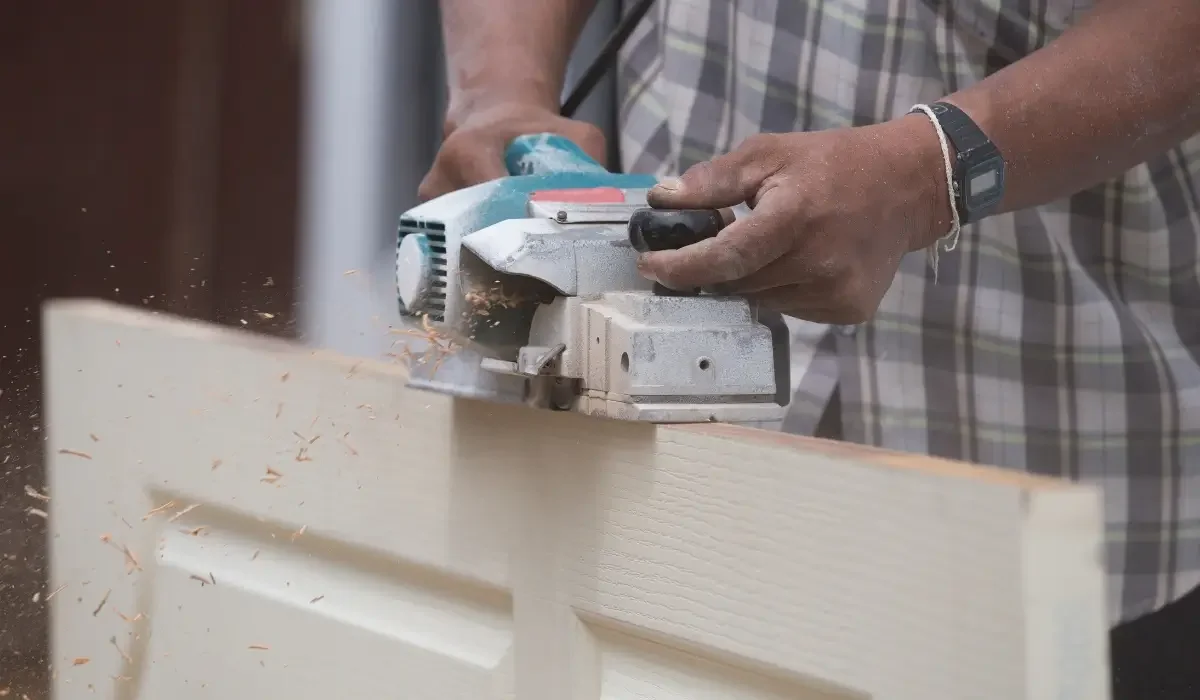
Don't Just Plane the Door and Move On
It's tempting to address a sticking door by sanding or planing down the edge that's catching. That might get the door working again temporarily, but if the cause is foundation movement, the problem that created the sticking isn't going anywhere. The frame will continue to shift, the door will start sticking again, and you'll have lost the opportunity to catch a foundation problem while it was still manageable.
Cosmetic fixes on top of structural symptoms are one of the most common ways a fixable foundation issue turns into a major repair. If you're not confident that humidity is the full explanation, it's worth having someone take a look at what's happening structurally before you break out the sandpaper.
Related: Why Are My Floors Uneven? Common Causes and What to Do About It

Getting the Right Diagnosis
The good news is that telling the difference between a humidity issue and a foundation issue doesn't have to be a guessing game. Aprofessional foundation inspection can assess not just the doors and windows but the full picture of what's happening with your home's structure, drainage, and soil conditions.If it turns out to be a humidity problem, you'll have peace of mind and maybe a recommendation to add a dehumidifier. If it's a foundation issue, you'll know early enough to address it before it gets significantly worse.AtFoundation Restoration, we help homeowners get clear answers rather than just temporary fixes. If your doors and windows are giving you trouble and you aren't sure why, reach out to our team and let's figure it out together.
Reference:
U.S. Environmental Protection Agency. A Brief Guide to Mold, Moisture, and Your Home. epa.gov. https://www.epa.gov/mold/brief-guide-mold-moisture-and-your-home