

What Happens If You Ignore a Leaking Basement Wall
It starts as something easy to dismiss. A small damp patch on the basement wall after a heavy rain. A thin white residue that forms along the base of the concrete. A musty smell you've gotten so used to that you barely notice it anymore. Life is busy, the leak seems minor, and fixing it feels like something you can get to eventually.
But a leaking basement wall isn't a problem that stays minor. It compounds. Every wet season that passes without addressing it adds more damage to the structure of your home, more mold to your air quality, and more cost to the eventual repair.
At Foundation Restoration, we often get called in after homeowners have been watching a slow leak for years, and the conversation is usually harder than it would have been earlier. Here's a clear picture of what actually happens when a leaking basement wall gets ignored.
The Water Keeps Finding Ways In
A wall that's leaking isn't a static situation. Water follows the path of least resistance, and once it finds an entry point into your foundation wall, it doesn't stop there. The pressure of saturated soil against the outside of your foundation wall is constant during wet periods, and that pressure is looking for anywhere it can push through.
What starts as seepage through a single crack gradually widens the crack as water repeatedly freezes, thaws, and flows through it. The concrete around the crack continues to deteriorate with each wet season. New cracks can form as hydrostatic pressure shifts. Entry points that were once small become larger, and the volume of water entering your basement increases over time rather than staying the same.
Waiting doesn't give the crack time to heal. There's no version of this where the problem resolves on its own.
Mold Establishes Itself Quickly
This is the consequence most homeowners underestimate in the early stages. Mold doesn't need a flooded basement to take hold. It needs moisture, a surface to grow on, and darkness. A leaking wall provides all three in abundance.
According to the U.S. Environmental Protection Agency, mold can begin to grow on building materials within 24 to 48 hours of moisture exposure. That means a wall that's been wet repeatedly over months or years has had hundreds of opportunities for mold colonies to establish and spread.
What makes this particularly serious in a basement setting is that mold doesn't stay in the basement. Through a phenomenon called the stack effect, air from the lowest level of your home rises upward through the structure, carrying mold spores into the living areas above. This is why homeowners often notice respiratory symptoms, increased allergy reactions, or persistent musty odors throughout the house when the real source is mold in the basement they rarely visit.
Mold remediation, once mold has spread to walls, insulation, and framing materials, is a significantly more expensive and disruptive process than waterproofing the wall that let the water in to begin with.
Related: Why Your Garage Floor Is Sinking and How to Fix It Before It Gets Worse
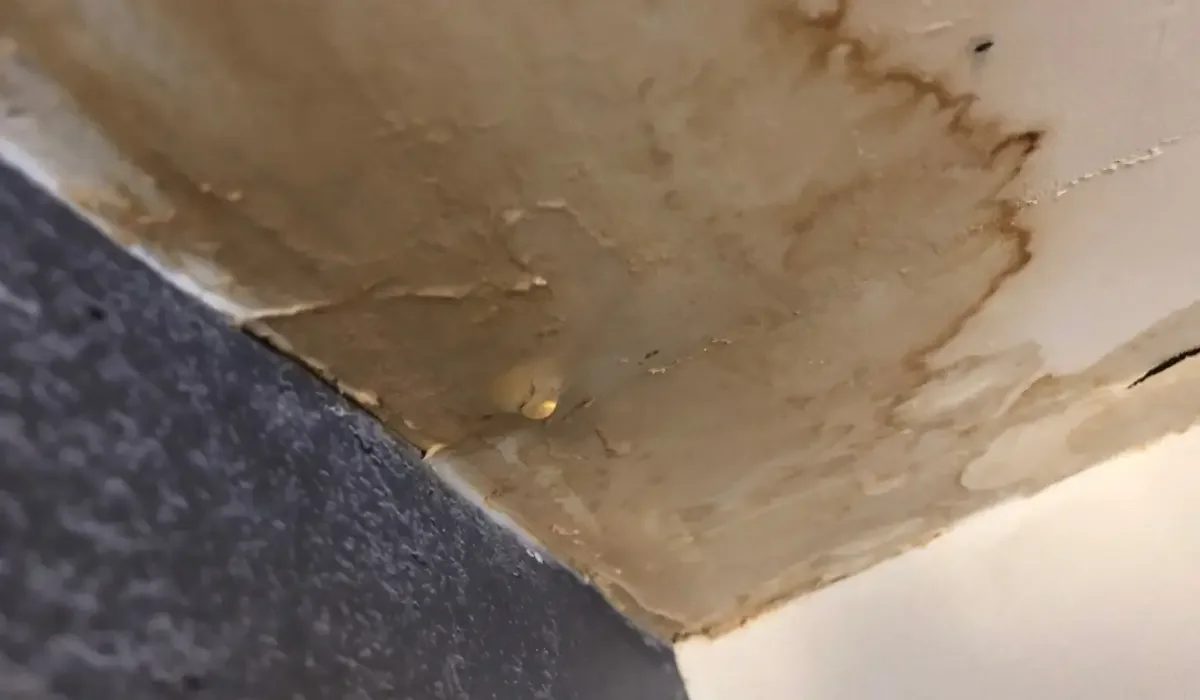
The Wood Structure of Your Home Is At Risk
Your basement or crawl space contains wood framing members that are critical to the structural integrity of your floors and the home above them. Sill plates, floor joists, and support beams that are regularly exposed to high humidity or direct moisture contact begin to absorb water. Over time, that absorption leads to wood rot, which softens and weakens the material in ways that aren't always visible from the surface.
Wood rot is one of the most insidious forms of structural damage because it progresses silently. A floor joist that looks intact from below can be significantly compromised on the inside, and the first sign many homeowners get is a floor that starts to feel soft or bouncy underfoot. By that point, the rot has been active for a long time.
Pest activity compounds the problem. Termites, carpenter ants, and other wood destroying insects are drawn to damp, softened wood. A leaking basement wall creates exactly the conditions that attract them, and an established pest infestation on top of existing moisture damage accelerates the structural deterioration significantly.
The Foundation Wall Itself Begins to Fail
Water that's repeatedly entering through a foundation wall isn't just a moisture problem. It's actively weakening the material that's holding your home up. Concrete deteriorates with sustained water exposure. The minerals in water leave deposits that displace concrete over time. Freeze thaw cycles within the wall widen cracks further with each cold period. If your foundation contains steel reinforcement, moisture that reaches the rebar causes it to corrode and expand, creating internal pressure that can cause sections of the wall to spall or crack dramatically.
The most serious consequence of untreated water intrusion is hydrostatic pressure. When water saturates the soil outside a basement wall over an extended period, that soil exerts tremendous lateral force against the wall. A wall that's been compromised by years of water intrusion is less able to resist that pressure. The result, in serious cases, is a wall that begins to bow inward. A bowing wall is no longer just a water problem. It's a structural emergency that requires intervention before the wall fails.
Related: What That Musty Smell in Your Basement Is Really Telling You

Your Energy Bills Climb Without Explanation
A damp basement raises the humidity of your entire home, and humid air is harder to heat and cool than dry air. Your HVAC system has to work harder to maintain a comfortable temperature, which shows up in your utility bills over time. Basement insulation that has absorbed moisture also loses its effectiveness, allowing conditioned air to escape more easily through the floor above the basement.
These effects are real but gradual, which is part of why homeowners often don't connect rising energy costs to the moisture problem in the basement. It's a quiet drain rather than an obvious one.
Your Home's Value Takes a Hit
A leaking basement wall that's been ignored leaves a trail of evidence that's very difficult to hide from a home inspector or a savvy buyer. Water staining, efflorescence, mold, deteriorating wood framing, and any sign of past water intrusion are exactly what buyers and inspectors are trained to find. And when they find them, they respond by either walking away or reducing their offer significantly.
In Washington state, sellers are legally required to disclose known material defects, and a history of basement water intrusion absolutely qualifies. Trying to conceal it isn't just unethical. It creates legal exposure after the sale if the buyer discovers evidence that wasn't disclosed. A documented, professionally repaired water problem is a very different situation than undisclosed ongoing damage.
Related: How Water Damage in Your Basement Can Affect Your Home's Value and What to Do About It

The Longer You Wait, the More It Costs
This is the point that matters most. Foundation and waterproofing repairs are almost universally more expensive the longer they're deferred. A crack that could have been injected and sealed early becomes a section of wall that's bowing and requires structural stabilization. A moisture problem that could have been addressed with an interior drainage system and sump pump becomes a mold remediation project combined with structural wood repair and foundation work.
The repair that felt too expensive to deal with when the leak was small becomes significantly more expensive after years of compounding damage. Throughout that time, the problem has been affecting your air quality, your structure, your energy bills, and your home's value without pause.
What You Should Do
If you've got a leaking basement wall and you've been putting it off, the best time to act is now, before another wet season adds more damage to what's already there. A professional evaluation will tell you exactly what's happening with your foundation, where the water is getting in, what the damage looks like so far, and what it'll take to fix it correctly.
At Foundation Restoration, we assess leaking basement walls as part of a complete picture of your home's foundation and drainage conditions. We'll give you honest answers about what the damage looks like and what level of repair it actually requires. Reach out to our team today and let's get ahead of this before it gets any worse.
Reference:
U.S. Environmental Protection Agency. A Brief Guide to Mold, Moisture, and Your Home. epa.gov. https://www.epa.gov/mold/brief-guide-mold-moisture-and-your-home
