

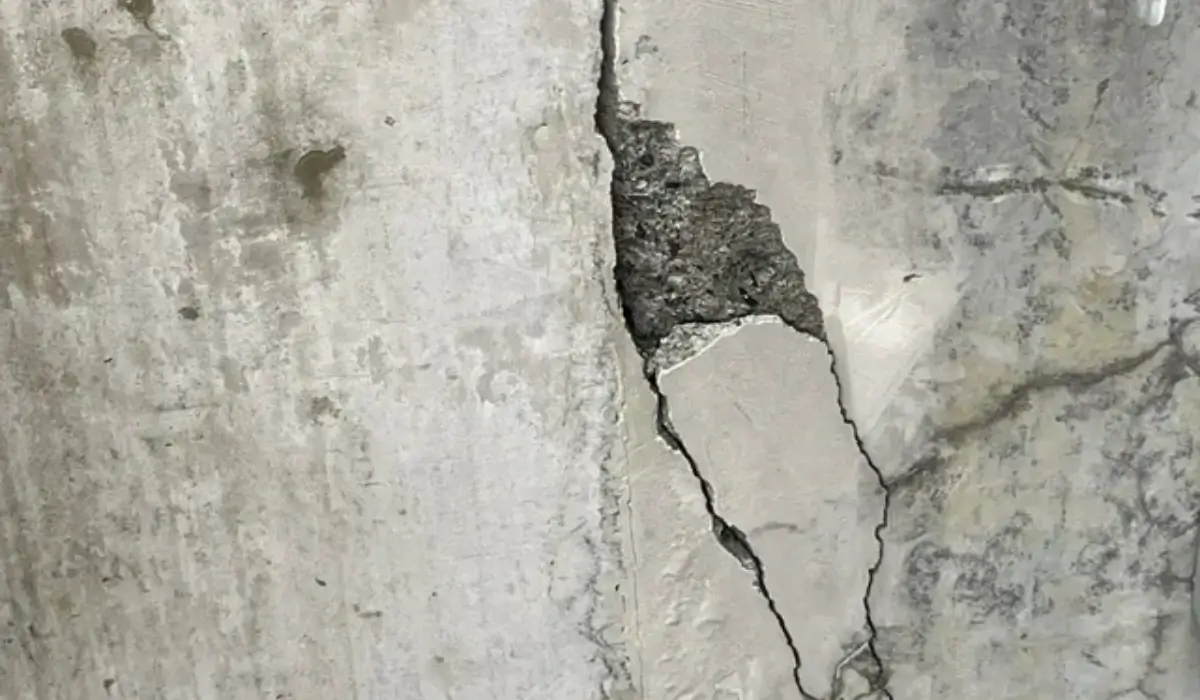
Cracks in walls and ceilings are one of those things that every homeowner notices eventually. Maybe you spot a thin line running across the corner of a room, or a crack that’s appeared above a doorway you walk through every day. Your first instinct might be to grab some spackle and paint over it. But before you do, it’s worth understanding what that crack is actually telling you, because not all cracks are created equal.
Some are completely harmless. Others are early warnings of a serious structural or foundation problem that’ll only get worse if it’s ignored. At Foundation Restoration, we help homeowners tell the difference so they’re not caught off guard by a problem that’s been quietly growing behind the walls.
Why Cracks Happen in the First Place
To understand what a crack means, it helps to understand why cracks form at all. Your home is constantly moving. Temperature changes cause building materials to expand and contract. Seasonal moisture shifts cause wood to swell and shrink. The soil beneath your foundation expands when it’s wet and compresses when it dries out. Over years and decades, all of that movement leaves its mark.
In many cases, small cracks are just the natural result of a house settling into its environment. But when that movement becomes excessive or uneven, the cracks that follow are telling a different story. That’s when you need to pay close attention.
Hairline Cracks: Usually Nothing to Lose Sleep Over
Hairline cracks are extremely thin, often barely visible, and typically found in drywall or plaster. They’re usually the result of normal settling, minor temperature fluctuations, or the natural drying and curing process of building materials in newer homes.
If a hairline crack isn’t growing, isn’t wide enough to fit a coin into, and isn’t accompanied by other symptoms like sticking doors or sloping floors, it’s generally not a cause for alarm. Patching and repainting is a perfectly reasonable response. That said, it’s still smart to keep an eye on it. A crack that stays the same is very different from one that’s quietly getting bigger.
Related: The Homeowner’s Guide to Understanding Waterproofing Options for Your Home
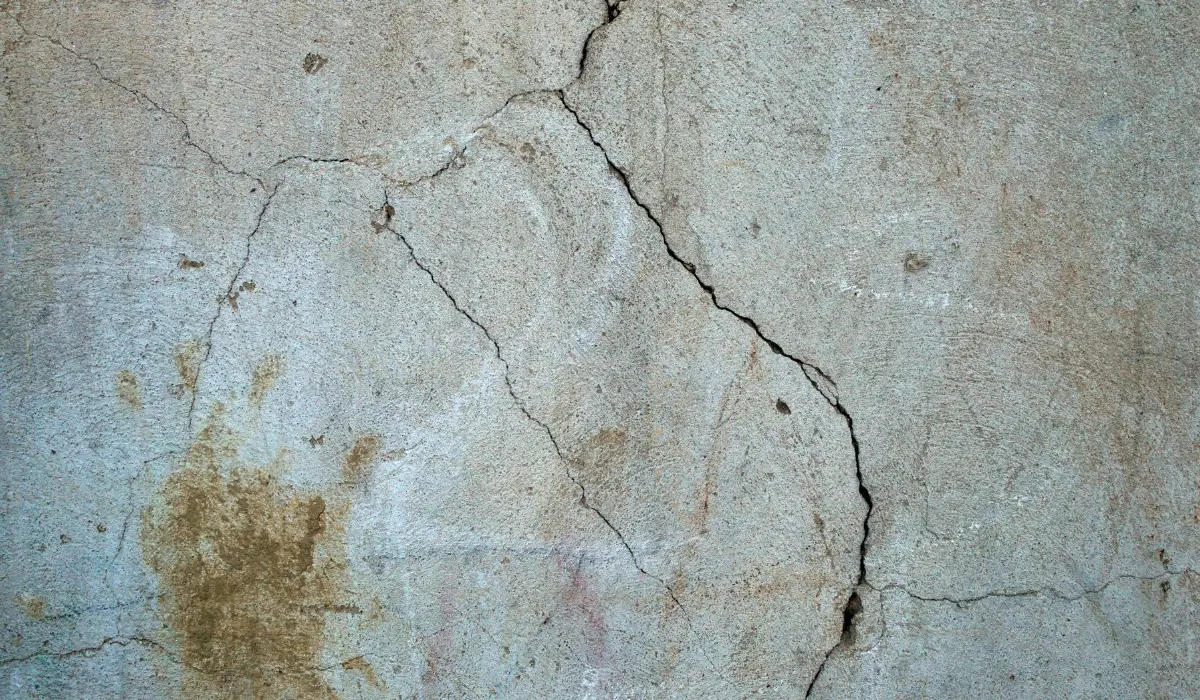
Diagonal Cracks: Pay Attention to These
Diagonal cracks, especially those that run at roughly a 45 degree angle from the corners of windows and doors, are one of the more telling signs of foundation movement. When a foundation settles unevenly, it distorts the structural frame of the house above it, and that distortion often shows up first at the corners of openings where the walls are under the most stress.
A single diagonal crack after an unusually dry summer might not be cause for immediate panic. But if you’re seeing diagonal cracks in multiple locations, if they’re wider than a quarter inch, or if they’ve appeared relatively quickly, it’s time to get a professional foundation evaluation rather than simply patching over them.
Horizontal Cracks: Take These Seriously
If you’ve got horizontal cracks in your basement walls, that’s one of the most urgent warning signs a homeowner can encounter. Horizontal cracks in poured concrete or concrete block walls indicate that the wall is under lateral pressure from the soil outside. That pressure is literally trying to push your wall inward, and a horizontal crack means the wall has already begun to give way.
Left unaddressed, a bowing or cracked basement wall can fail entirely. This isn’t a patch and paint situation. It’s a structural repair that needs to happen sooner rather than later. If you’re seeing horizontal cracking in your basement, don’t wait to reach out to a foundation specialist.
Stair Step Cracks in Brick or Block
If your home has a brick exterior or a concrete block foundation, keep an eye out for stair step cracks – cracks that follow the mortar joints in a staircase pattern. These are a classic indicator of differential settlement, meaning one section of your foundation is sinking at a different rate than the rest.
Stair step cracks can appear both on the interior and exterior of your home. On the outside, they’re often easy to spot in brick facades or block foundations. On the inside, you might see them in a block basement wall. Either way, they’re worth having assessed by someone who specializes in foundation repair, because the pattern tells a clear story about what’s happening underneath.
Related: 5 Warning Signs Your Foundation Needs Attention Before It Becomes a Major Problem
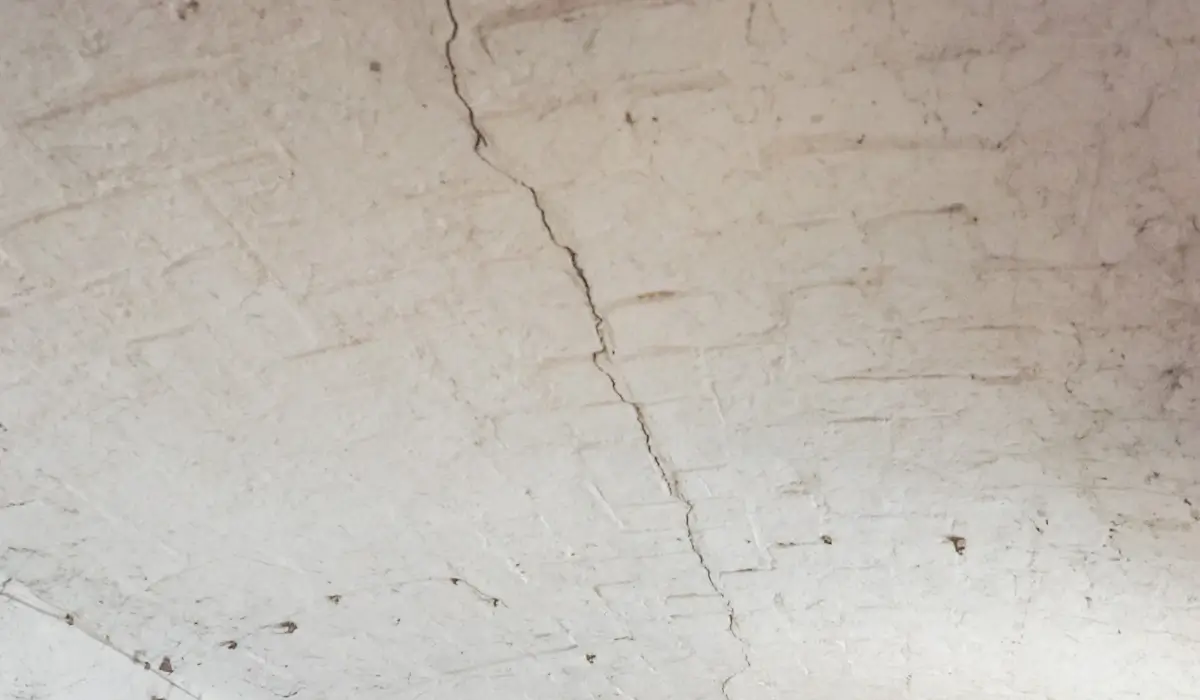
Ceiling Cracks: Context Is Everything
Ceiling cracks get a lot of homeowners worried, but they’re not always cause for concern. A single hairline crack running along a ceiling seam is usually just the result of drywall tape aging or minor settling. It’s cosmetically annoying but structurally harmless.
What you don’t want to see is a large crack that runs across the center of a ceiling, a crack that’s accompanied by sagging or bowing, or cracks that appear alongside wall cracks and other symptoms. Wide ceiling cracks, especially ones that seem to grow quickly or appear in a pattern, can indicate roof structure issues, compromised support beams, or foundation movement that’s working its way up through the entire structure of the home.
When You Should Definitely Call a Professional
Here’s a simple way to think about it. You shouldn’t worry too much about a crack that’s thin, stable, and isolated. You should absolutely call a professional when you notice any of the following:
- Cracks that are wider than a quarter inch,
- Cracks that are actively growing or have changed noticeably over a short period of time,
- Horizontal cracks anywhere in your basement or foundation walls,
- Cracks that appear alongside other symptoms like sticking doors, uneven floors, or gaps between walls and ceilings, and
- Any crack that’s accompanied by water intrusion or moisture.
These aren’t situations where a cosmetic fix is going to cut it. They need a real diagnosis from someone who understands what’s happening structurally.
Related: Why Are My Floors Uneven? Common Causes and What to Do About It

Don’t Guess, Get It Checked
The problem with cracks is that they’re easy to dismiss because they often don’t look that dramatic. A thin line across a wall doesn’t feel urgent. But cracks are one of the clearest ways your home communicates that something’s changing beneath the surface, and the earlier you understand what’s driving them, the better your options are going to be.
At Foundation Restoration, we’ll take a thorough look at what’s behind the cracks in your home and give you an honest assessment of what they mean and what to do next. Don’t let a crack become a much bigger problem. Reach out to our team and let’s figure it out together.

Leave A Comment
You must be logged in to post a comment.